
The Smoke That Clears the Distance
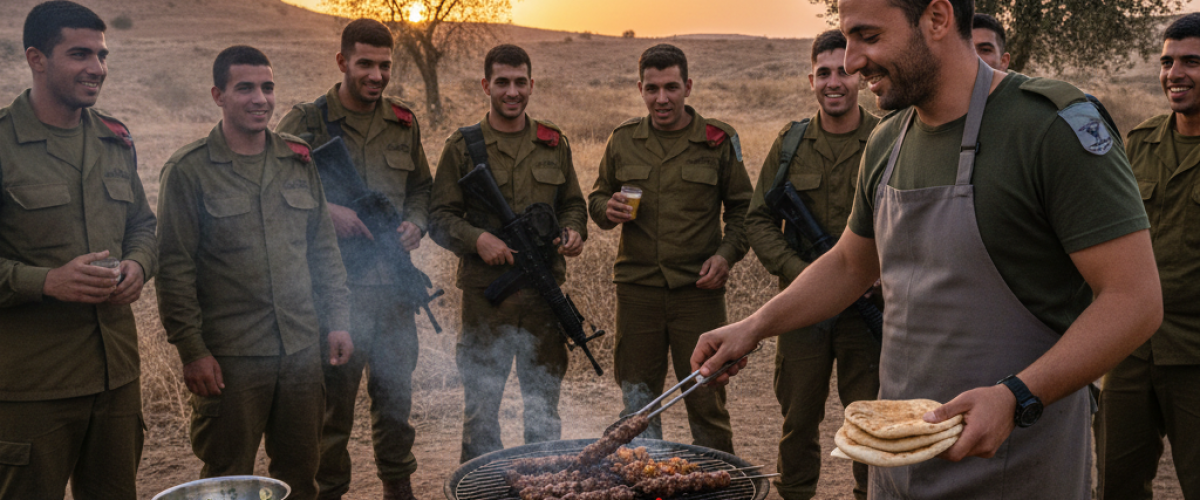
Late in the afternoon, as the heat begins to drain from the Negev sky, the charcoal takes hold with a dry hiss. To anyone looking on from the road, it is simply a mobile kitchen springing to life: heavy black cast-iron grates settling over glowing embers, aluminum trays gleaming in rows, boxes of fresh flatbreads waiting to be warmed.
Yet within minutes, the perimeter of the outpost softens.
Soldiers emerge from armored personnel carriers, tactical tents, and watchtowers. Their boots are coated in pale chalk dust, their uniforms stiffened by salt and sun. Most have spent days or weeks operating on dry field rations, energy bars, and lukewarm instant coffee. But when the aroma of charred beef kebabs seasoned with cumin and coriander drifts across the gravel, something unspoken shifts in their posture. Their shoulders drop an inch. The guarded, vigilant gaze of people living on borrowed hours gives way to an instinctive curiosity.
They don’t just come for the hot meal, though hunger is real and constant. They come to stand by the smoke. Over hundreds of barbecues across the country, we have learned that the perimeter of a grill is a sacred, neutral ground where conversation flows as naturally as warmth.
“Tell My Mother I Ate Vegetables”
One of the first things soldiers share—often with an easy, self-deprecating grin—is an inventory of the small, everyday domesticities they miss most. When you are far from home, the grand narratives fall away. What remains are the micro-textures of family life.
“Tell my mother you saw me eating salad,” a twenty-year-old paratrooper named Noam joked last month, heaping diced cucumbers, tomatoes, and fresh parsley alongside a generous portion of grilled ribeye skewers. “If she knows I’ve survived on canned tuna and crackers for three weeks straight, she will drive down here herself with twenty containers of chicken soup.”
Laughter ripples quickly through the line at jokes like these, but beneath the humor sits a deep longing for home. Soldiers often pull out their phones to show us pictures. They do not show combat footage; they show photos of their golden retrievers sleeping in patches of sunlight, the balcony garden their father tends in Petah Tikva, or a snapshot of a younger sister blowing out birthday candles without them.
Feeding someone isn’t just about calories; it is a direct conduit to memory. When a soldier takes a bite of a freshly grilled chicken thigh drizzled with creamy tahini and tangy amba, they aren’t just tasting spices. They are tasting the Friday afternoon rhythm of their mother’s kitchen, where music plays and the table is set with white linens.
A Bridge Across Generations
Around the fire, the traditional boundaries that divide daily Israeli life evaporate completely. On any given evening, you find twenty-year-old conscripts standing shoulder to shoulder with reservists in their forties—veteran tech entrepreneurs, teachers, mechanics, and farmers who left their civilian routines in a matter of hours.
Here, they talk about what waiting feels like, and what they hope will be waiting for them on the other side:
- **The Reservist Balancing Act:** Older soldiers speak openly about the dissonance of stepping out of family life and boardrooms into combat boots, worrying about mortgage payments and school drop-offs while standing night watch.
- **The Young Dreamers:** The younger soldiers speak of travels put on pause—trips to South America, university degrees deferred, music festivals missed—yet they speak without bitterness, carried by a fierce sense of protective duty.
- **The Simple Desires:** More than anything, they talk about ordinary miracles: sleeping eight uninterrupted hours on a soft mattress, drinking water from a real glass rather than a scratched plastic canteen, hugging their children.
“When you grill out here,” an artillery reservist named Daniel told our team as he watched coals flare, “you bring the civilian world back to us. You remind us that out there, life is still beautiful, people are still loving, and society hasn’t forgotten why we are standing here.”
Bearing Witness Without Words
Not every conversation by the grill is lighthearted, and not every soldier wants to speak. Some of the most profound interactions we experience require very little dialogue at all.
There are evenings when a platoon returns from an exhausting mission. They arrive with heavy silence hanging over them like a shroud, carrying memories they cannot easily translate into speech. In those moments, our volunteers know not to ask prying questions. We do not ask where they have been or what they have seen.
Instead, we hand them a pair of stainless steel tongs.
“Watch these steaks for a minute while I grab the bread,” a volunteer will say quietly.
It is a deliberate gift: the simple, grounding physical task of tending food. Watching meat sear, turning a skewer at the right second, feeling the heat of the fire on tired hands—it roots a person back into the physical present. Food serves as a gentle buffer against trauma.
Eventually, quiet words emerge. A soldier might look down at the coals and speak of a close friend they lost, or the sheer weight of responsibility they feel for the teenager standing next to them. We listen. We nod. We hand them a warm pita pocket filled with savory, tender beef. Often, that unspoken solidarity is the greatest nourishment we can offer.
The Fuel of Gratitude
Before we pack our trucks under the desert stars, there is always a moment of lingering. Empty plates are stacked, embers are safely doused with water, and the soldiers gather to help us load the coolers and tables back onto the trailers.
Over and over, they express a deep, almost bewildered gratitude. “You drove five hours just to make us barbecue?” they ask. “Who paid for all this beef? Who sent you?”
When we explain that thousands of supporters from across the globe—people they will never meet, who live oceans away—contributed so they could have an authentic, generous feast, their faces change. Isolation is one of the hardest burdens of military service. Knowing that strangers across continents hold them in their hearts, that every skewer was funded by someone praying for their safety, bolsters their morale far more than any tactical briefing ever could.
“We thought we were alone in the dark out here,” a young tank commander told us as he shook our hands. “Now we know the whole world is standing behind us.”
More Than a Meal
Grilling for Israel has served more than 234,000 hot, kosher BBQ meals since October 7th. Every single meal represents a plate of protein, fresh vegetables, and warm bread. But far beyond the statistics, every meal represents a conversation held over the coals.
It is a moment where a weary protector can lay down their rifle, pick up a plate, and simply be a son, a daughter, a father, or a friend again. It is a reminder of peace amidst turmoil, of warmth amidst cold, and of the unbreakable community that surrounds them every day they serve.
As long as our soldiers stand guard to protect their families, our grills will remain lit—ready to serve, ready to listen, and ready to remind them that they are cherished.